
If you spend any real time doing research with AI tools, you have probably already noticed the pattern: Perplexity gives you a neat list of citations, ChatGPT gives you a confident, well-written answer that you then have to verify yourself. The Perplexity vs ChatGPT debate comes down to one question: which one can you actually trust for research?
For research specifically, Perplexity has a measurable accuracy edge on citations over ChatGPT Search. But ChatGPT is still the stronger tool for turning raw research into a finished report, brief, or piece of content. Most serious researchers end up paying for both at $20/month each (Plus tiers), using Perplexity to source and ChatGPT to synthesize.
The real question is whether that workflow actually makes sense for you, and when you can skip one subscription entirely.
What actually separates these two tools for research?
Perplexity is a citation-first answer engine built on top of real-time web search. Every response pulls live sources and surfaces them by default.
ChatGPT is a general-purpose conversational assistant where web search and citations are features layered onto the core design, not the foundation of it.
That single architectural difference drives almost every practical gap between the two tools covered in the table below.
How the two tools compare for research
| Perplexity Pro | ChatGPT Plus | |
| Real-time web access | Default on every query | Available, not default |
| Citations shown | Every response | Varies by mode |
| Citation failure rate | 37% (Tow Center, March 2025) | ~67% (Tow Center, March 2025) |
| Deep Research speed | Under 5 minutes | 5 to 30 minutes |
| Deep Research depth | Broad sourcing, fast | More analytical, slower |
| Primary model | Sonar (+ model switching) | GPT-5.6 |
| Known limitation | Citations need spot-checking; misattribution is the main failure mode | Web search is a feature, not the foundation; synthesis is stronger than sourcing |
| Key risk | Tier and quota structure changed multiple times in 2026 | Deep Research wait time makes it impractical for fast-turnaround work |
| Free tier | $0/mo — citations on every answer, basic AI models | $0/mo — limited GPT-5.5 Instant access, limited Deep Research |
| Paid plan | Pro: $20/mo ($16.67/mo annual) | Plus: $20/mo |
| Higher tier | Max: $200/mo — 10,000 monthly credits, premium databases | Pro: from $100–$200/mo — GPT-5.6 Sol Pro, 5x or 20x more usage |
| Best for | Fast sourcing, fact-checking, real-time research | Synthesis, writing, long-form analysis |
When Perplexity is the right pick
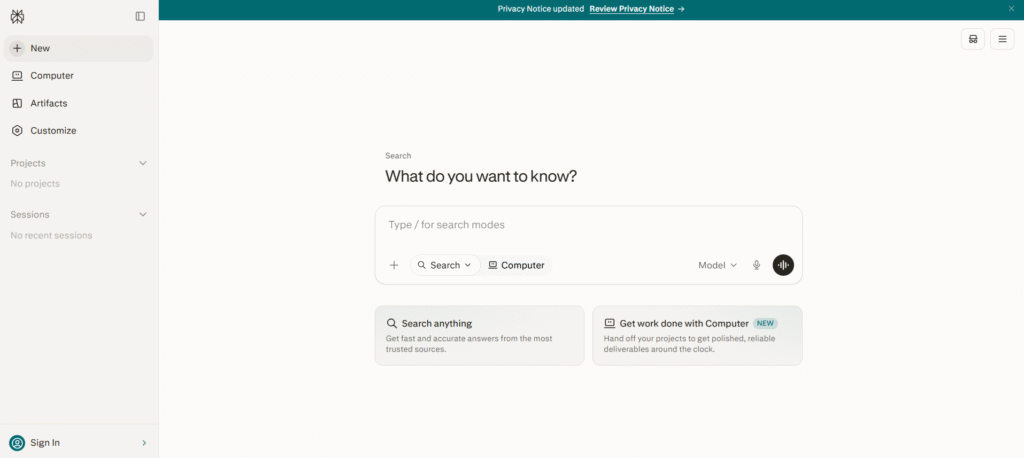
Perplexity earns its place the moment your research depends on information that exists right now, not six months ago. Breaking news verification, current pricing checks, recent funding announcements, live regulatory updates: these are queries where ChatGPT’s training-data starting point is a liability and Perplexity’s real-time web access is a structural advantage.
For content researchers and SEO professionals doing competitive analysis, Perplexity is faster for pulling current tool pricing, feature updates, and company news than any search-then-summarize workflow. I use it specifically at the start of a competitive research brief: five or six sourced queries in Perplexity will tell me what changed in a market since my last check, in a fraction of the time it takes to manually pull sources.
Perplexity also has a source-filtering feature worth knowing about: you can restrict queries to academic, finance, or social sources depending on what kind of information you actually need. For coursework and paper research, the academic filter narrows results to peer-reviewed and institutional sources rather than general web content.
The free tier gives you access to a limited number of Pro Search queries at no cost, making it a reasonable starting point before committing to a subscription.
When ChatGPT is the right pick
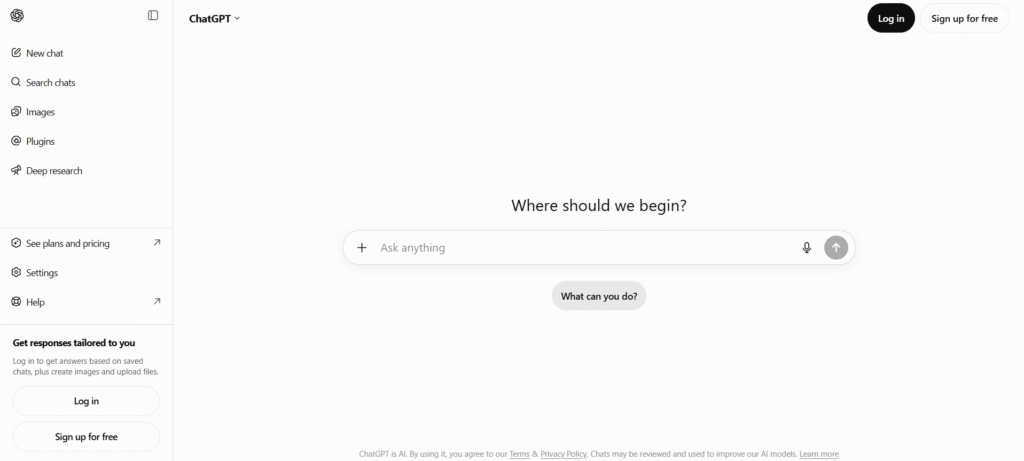
The gap flips when you need to do something with your research, not just collect it.
ChatGPT is better at holding a long research thread together. If you are synthesizing a literature review, turning a competitive brief into a structured report, or analyzing a document you have uploaded, ChatGPT’s depth of reasoning and writing quality pull noticeably ahead. Deep Research mode on ChatGPT takes longer than Perplexity’s (5 to 30 minutes versus under 5), but the output tends to be more analytically structured, with stronger cross-source synthesis rather than just a broad sourcing sweep.
For anything involving Custom GPTs or Canvas, ChatGPT’s ecosystem is deeper. If your research feeds directly into a writing workflow, staying inside ChatGPT reduces the friction of moving material between tools.
“Okay, but does ChatGPT actually cite its sources now?” It does, with web search enabled, but the citations are less consistent and less central to the experience than Perplexity’s. Which brings us to the part most articles get wrong.
The citation-accuracy question, answered with data
Here is the number that changes how you think about this comparison.
A 2025 study by the Tow Center for Digital Journalism at Columbia University ran 1,600 tests across eight AI search engines. Perplexity had the lowest citation failure rate at 37 percent. ChatGPT Search failed roughly 67 percent of the time. Full study at Nieman Lab, March 2025.
The more important finding is how citations fail. The dominant failure mode was misattribution: a real URL credited with a claim it does not contain. Not fabricated links. Real links, wrong claims. A Perplexity citation still needs a spot-check before you quote it anywhere that matters.
Two 2026 studies add further weight. A Whitehat SEO analysis of 118,000 AI responses found Perplexity averages 21.9 citations per response versus ChatGPT’s 10.4. A separate Profound analysis of 680 million citations found only 11 percent of domains are cited by both tools for similar queries. They are pulling from almost entirely different source pools, which is the strongest data-backed reason to use both in sequence rather than picking one.
G2’s Winter 2026 Grid Report confirms this at the user level: Perplexity leads on content accuracy (8.2/10 vs. 8.0/10) specifically, the one metric that matters most for research work.
Where they overlap, and whether it still matters in 2026
As of mid-2026, the overlap between the two tools is real. Both now offer Deep Research modes. Both surface citations to varying degrees. Both can handle complex, multi-step queries. The difference is that Perplexity’s Deep Research starts from live web sources by default, while ChatGPT’s starts from reasoning and reaches for the web as needed, the same architectural gap that separates them on everyday queries applies here too.
The overlap does not erase that gap. It narrows it.
What real users actually say
The enthusiasm for Perplexity in research circles is real, but not universal.
In the XDA-Developers comment thread on a 2025 Perplexity review, readers pushed back directly. One flagged that Perplexity hallucinates more than advertised, with invented references appearing in practice. Another said they bounce between ChatGPT, Perplexity, and DeepSeek without a clear winner, because result quality depends on the query, not just the tool.
On Blind, working professionals reported paying for Perplexity Pro and barely touching it once they already had ChatGPT. The reaction was consistent: one $20/month subscription covers most needs.
G2 verified user data puts Perplexity ahead on content accuracy (8.2/10 vs. 8.0/10), while ChatGPT leads overall (4.7/5 vs. 4.5/5) on satisfaction and ease of use.
Is it worth paying for both?
This is the question most comparison articles dodge. Here is a direct answer based on what the data and real users actually show:
- Pay for both if your work involves regular real-time fact-finding AND regular long-form synthesis or writing. Journalists, content strategists, market researchers, and academic researchers doing literature reviews fall into this category. The $40/month combined spend is justified when both tools are in active daily rotation.
- Pay for Perplexity Pro only if your primary need is fast, sourced fact-checking and you do minimal long-form writing inside an AI tool. The free tier of ChatGPT covers occasional synthesis needs adequately.
- Pay for ChatGPT Plus only if your primary need is writing, analysis, and synthesis, and your research queries are not heavily time-sensitive. The web search capability on Plus covers most sourcing needs for non-breaking topics.
- Skip both paid tiers if you are mostly asking general knowledge questions or doing non-time-sensitive research. The free tiers of both tools handle those queries well enough that a subscription is hard to justify.
The combined workflow most power users actually land on
For researchers who pay for both, the workflow that comes up repeatedly across sources is consistent: Perplexity for sourcing and fact verification, then ChatGPT for structuring, writing, and synthesizing that material into a final output.
In practice, this looks like the following for content and SEO research specifically:
- Step 1: Run 3 to 5 Perplexity queries to pull current pricing, competitor feature updates, recent news, and any breaking developments in the topic area.
- Step 2: Spot-check 2 to 3 of the citations Perplexity surfaces before moving forward. The Tow Center data puts the misattribution rate at 37 percent — fast to check, important not to skip.
- Step 3: Paste your verified sourced findings into ChatGPT with a clear synthesis prompt specifying the output format you need (competitive brief, article outline, research summary).
- Step 4: Use ChatGPT to structure the output, fill in the analytical gaps, and produce the final draft or document.
I ran this sequence while researching a recent tool comparison for TheDiscoverAI and the Perplexity sourcing pass covered what would have taken 45 minutes of manual source-pulling in under 10 minutes. The ChatGPT synthesis step turned those raw sources into a structured brief in one pass.
Perplexity’s Deep Research works best when you need breadth fast. ChatGPT’s Deep Research works best when analytical depth matters more than speed.
For the full standalone breakdown of each tool, the Perplexity AI listing and the ChatGPT listing on TheDiscoverAI cover features, pricing, and verdicts in full detail.
The bottom line
Perplexity is better than ChatGPT for research if what you mean by “research” is fast, cited, real-time fact-finding. ChatGPT is better if what you mean is turning research into something finished.
The Tow Center data confirms the citation gap is real, but the gap is narrower than most single-author reviews suggest, and neither tool’s citations can be trusted without verification. For most researchers doing serious work, the answer is not Perplexity vs. ChatGPT. It is Perplexity then ChatGPT, in that order.
Start with the free tier of whichever tool fits your primary need and add the second only when you hit its ceiling.
Frequently asked questions
Is Perplexity better than ChatGPT for research?
For citation-backed, real-time fact-finding, yes. The Tow Center’s 1,600-query benchmark (Columbia University, March 2025) found Perplexity’s citation failure rate at 37 percent versus roughly 67 percent for ChatGPT Search. For synthesis, writing, and turning research into a finished report, ChatGPT’s reasoning depth and writing quality pull noticeably ahead.
Does Perplexity actually hallucinate less than ChatGPT?
On citation accuracy specifically, yes, according to the Tow Center benchmark. But the dominant failure mode in that study was misattribution, meaning a real link credited with a claim it does not contain, not fabricated URLs. A Perplexity citation still requires verification before you quote it in anything that matters.
Should I pay for both Perplexity Pro and ChatGPT Plus?
It depends on your workflow. If you regularly need both real-time sourcing and long-form synthesis, the $40/month combined spend is justified. If one task dominates your work, one subscription covers most needs. The “Is it worth paying for both?” section above breaks down all four decision scenarios in detail.
Is Perplexity Pro worth it for students?
The free tier gives you a limited number of Pro Search queries at no cost, making it a reasonable starting point for occasional research without committing to a subscription. For heavy academic research requiring consistent access to Perplexity’s full Pro Search, the $20/month plan makes sense. ChatGPT’s free tier has historically offered less reliable web access, though this gap has narrowed through 2026.
What is the real difference between Perplexity and ChatGPT?
Perplexity is a citation-first answer engine built around real-time web search. ChatGPT is a general-purpose conversational assistant where web search and citations are a feature, not the core architecture. That design difference drives most of the practical gap between the two tools for research tasks.
Can I use Perplexity and ChatGPT together for research?
Yes. The most effective sequence is Perplexity for sourcing and fact verification, then ChatGPT for structuring and writing the final output. The combined workflow section above breaks this down into four specific steps for content and SEO research.
Is Perplexity’s Deep Research faster than ChatGPT’s?
Yes. Perplexity’s Deep Research typically completes in under five minutes. ChatGPT’s Deep Research takes roughly 5 to 30 minutes but is generally regarded as more analytically thorough for complex synthesis tasks.