

If you’ve searched “Gramhir.pro AI image generator” and landed on dozens of reviews praising its features, you deserve a more honest answer.
This review covers what Gramhir.pro actually is today, why there’s so much conflicting information about it, and what you should use instead depending on your real goal.
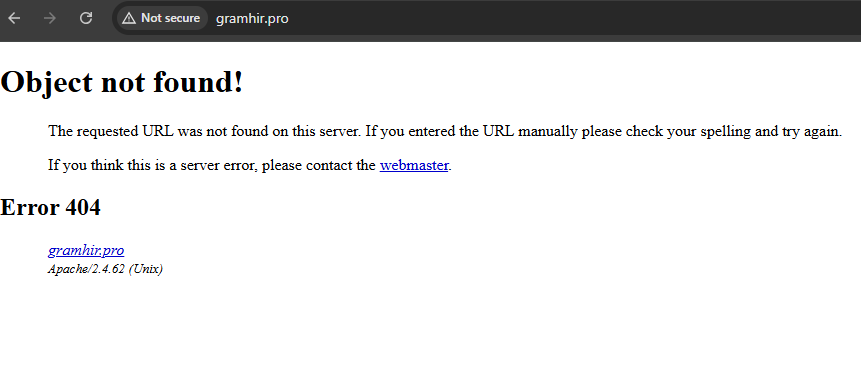
Update — April 2026: Gramhir.pro is currently returning a 404 error and is not accessible. Whether this is temporary or permanent is unclear. If you’re evaluating it as a tool, treat it as non-functional and refer to the alternatives section below.
What Is Gramhir.pro And Why Is There So Much Confusion?
Gramhir has meant different things at different points in time, and that’s the root of most of the confusion online.
The original Gramhir was an Instagram analytics and viewer tool. It allowed users to browse public Instagram content — posts, stories, and engagement data — without needing to log in, making it popular among marketers doing anonymous competitor research.
The current Gramhir.pro is a different story. According to its own footer description, Gramhir.pro is an informational platform covering AI and science news — not a tool that lets you generate images. It publishes articles about AI tools but does not offer any functional AI tools itself.
So why does “Gramhir.pro AI image generator” rank and get searched?
The keyword picked up volume because Gramhir.pro has content categories labeled “AI Art Generator” and “AI Voice” — but these are review articles about other tools, not actual generators. Other websites then wrote articles targeting the same keyword, creating a loop that amplified the association, even though the tool never existed.
This matters for anyone making a content or tool decision based on search results.
Does Gramhir.pro Have a Working AI Image Generator?
No — and this is the most important thing to clarify before you spend time on it.
Independent testing found no working image generation interface on the site. Despite widespread marketing claims, the AI image generator is not operational — users encounter redirects, ads, and placeholder screens where functioning tools are expected. Some find only articles instead of the promised tools.
This is a meaningful gap that every competitor review either misses or actively contradicts with fabricated “test results.”
What you should do: If your goal is AI image generation, skip Gramhir.pro entirely and go directly to tools that actually work. More on that below.
What Gramhir.pro Actually Offers Today
Based on what Gramhir.pro was offering before going offline — not what it marketed — here’s an honest breakdown:
What it is:
- An AI and technology news/blog platform
- A publisher of informational articles about AI tools
- A site that covers topics like AI art, AI voice, and machine learning trends
What it is not:
- A functional AI image generator
- A working Instagram analytics tool (the original domains — Gramhir.com and Gramhir.net — are no longer active)
- A platform where you can input a prompt and receive an image
As of late 2025 (the last available traffic estimate), Gramhir.pro was receiving around 81,300 monthly visitors — most of them arriving with the wrong expectation because of how the keyword evolved.
Who Originally Used Gramhir (And What They Were Getting)
Understanding the original use case helps explain why the name still carries search volume.
The earlier Gramhir platform served a specific audience well:
- Social media managers doing anonymous competitor research on Instagram
- Influencers tracking engagement benchmarks without logging in
- Small business owners checking public profile performance before outreach
- Marketers analyzing hashtag performance without a paid analytics subscription
Features included profile analysis, post performance metrics, engagement rate calculation, and growth tracking — all accessible without an Instagram account or login.
That version of the tool no longer exists in a reliable form. The original domains have been deactivated or redirected, and Gramhir.pro now operates under a different identity.
If you were a previous user looking to return to those features, you need a different tool — covered in the alternatives section below.
Why So Many Reviews Get This Wrong
This is worth addressing directly because it affects how you evaluate any review you read — including this one.
Most articles ranking for “Gramhir.pro AI image generator” do one of the following:
Fabricate a product that doesn’t exist. Several high-ranking pages describe detailed feature walkthroughs, testing results, and use case guides for an AI image generator that has no working interface. This is invented content written to capture search traffic.
Repurpose generic AI tool descriptions. Some pages copy the structure of legitimate AI image generator reviews and apply it to Gramhir.pro by name — describing GAN architecture, diffusion models, and style controls that have no demonstrated connection to this specific platform.
Confuse the brand history. A few pages mix up features from the original Instagram analytics tool with claims about AI image generation, creating a composite description that doesn’t match either product accurately.
The practical takeaway: if a review claims to have tested Gramhir.pro’s image generator and shows sample outputs, treat that with serious skepticism. Systematic testing found no working generation interface, and no credible independent verification of image outputs exists.
Reader Questions Worth Thinking About
- Are you searching for Gramhir.pro because you want to generate images, or because you saw it mentioned in an article about AI tools?
- If you used the original Gramhir for Instagram analytics, do you know that the platform you used is no longer available under that name?
- Have you checked whether the review you’re reading actually tested the tool, or just described features from other AI generators?
- If your goal is quick social media visuals, do you know what free tools actually deliver that today?
- Are you evaluating Gramhir.pro as part of a content workflow, or are you trying to understand why it keeps appearing in AI tool searches?
What to Use Instead — Based on Your Actual Goal
Since Gramhir.pro doesn’t deliver on either of its associated use cases reliably, here’s where to go depending on what you actually need.
If You Need AI Image Generation
These tools have working interfaces, documented outputs, and active user communities:
| Tool | Best For | Free Tier | Key Strength |
| Midjourney | High-quality creative visuals | No | Best aesthetic output quality |
| Leonardo AI | Marketing and product visuals | Yes | Fine-tuned style control |
| Google Gemini | Quick image generation within workflows | Yes | Integrated with Google tools |
| ChatGPT (DALL-E) | Conversational image generation | Limited | Easy prompt iteration |
If You Need Instagram Analytics
These are established tools with real data and working interfaces:
| Tool | Best For | Key Feature |
| Instagram Insights | Your own account only | Native, always accurate |
| Hootsuite | Multi-account management | Scheduling + analytics combined |
| Sprout Social | Agency and team use | Competitor benchmarking |
| Picuki | Quick anonymous profile viewing | No login required |
What This Means for Startup Marketers and Content Teams
If you’re evaluating tools for a content workflow, the Gramhir.pro situation is a useful case study in how AI tool marketing outpaces actual product development.
A few practical conclusions:
Don’t build workflows around tools you haven’t personally verified work. The gap between a tool’s marketing page and its actual functionality can be significant — especially for newer platforms that pivot identities quickly.
Search volume isn’t proof of product legitimacy. Gramhir.pro gets tens of thousands of monthly searches, but that traffic is almost entirely driven by keyword association, not by users who found value in a working product.
For social media visuals at scale, the more reliable path for content marketers and small teams is a combination of a proven image generator (Leonardo AI or Midjourney) paired with a lightweight design tool like Canva for brand consistency. This approach is verifiable, scalable, and doesn’t depend on a platform’s marketing claims.
For Instagram competitive research, native Instagram Insights covers your own account data, while tools like Sprout Social or even manual review of public profiles serve most small team needs without relying on third-party scrapers that may violate Instagram’s terms of service.
Limitations and Honest Trade-offs of This Review
A few things this article cannot confirm:
- Whether Gramhir.pro will return or add a functional image generator in the future — the site is currently offline, so this cannot be confirmed either way.
- The exact current state of the site’s backend, since web platforms update without announcement.
- Whether pricing information exists — pricing models for Gramhir.pro are not currently advertised online.
Final Verdict
Gramhir.pro is best understood as a content and news platform that built search visibility around an AI image generator keyword it doesn’t actually support. The original Instagram analytics product that gave the brand its reputation no longer operates reliably.
For any practical purpose — image generation, Instagram analytics, or content marketing — you’re better served by tools built specifically for those jobs.
The value of knowing this before you spend time on it is exactly what a real review should provide.
FAQs
Does Gramhir.pro have a working AI image generator?
No. The site is currently offline. See the section above for full details.
What was the original Gramhir used for?
The original Gramhir was an Instagram viewer and analytics tool that allowed users to browse public profiles, view stories, and check engagement data without logging in. Those domains are no longer reliably active.
Is Gramhir.pro safe to use?
As of April 2026, the site is offline and returning a 404 error, so it cannot be accessed or used. Previously, users reported encountering redirects and ads rather than functional tools. As with any third-party platform, avoid entering login credentials or personal data. Exercise standard caution with any third-party platform — avoid entering login credentials or personal data.
What is the best free AI image generator alternative?
Leonardo AI offers a working free tier with style control suited for marketing visuals. Midjourney produces the highest quality outputs but requires a paid plan.
Why does Gramhir.pro appear in so many AI tool lists?
The keyword association grew because Gramhir.pro publishes content categories labeled “AI Art Generator” and “AI Voice,” which are informational articles — not tools. Other sites then wrote reviews targeting the same keyword, amplifying the association regardless of whether the product existed.
Can I use Gramhir.pro for Instagram competitor research?
Not reliably. The original analytics functionality that made Gramhir popular for competitor research is no longer available. For anonymous Instagram viewing, tools like Picuki or Inflact serve that purpose more dependably today.